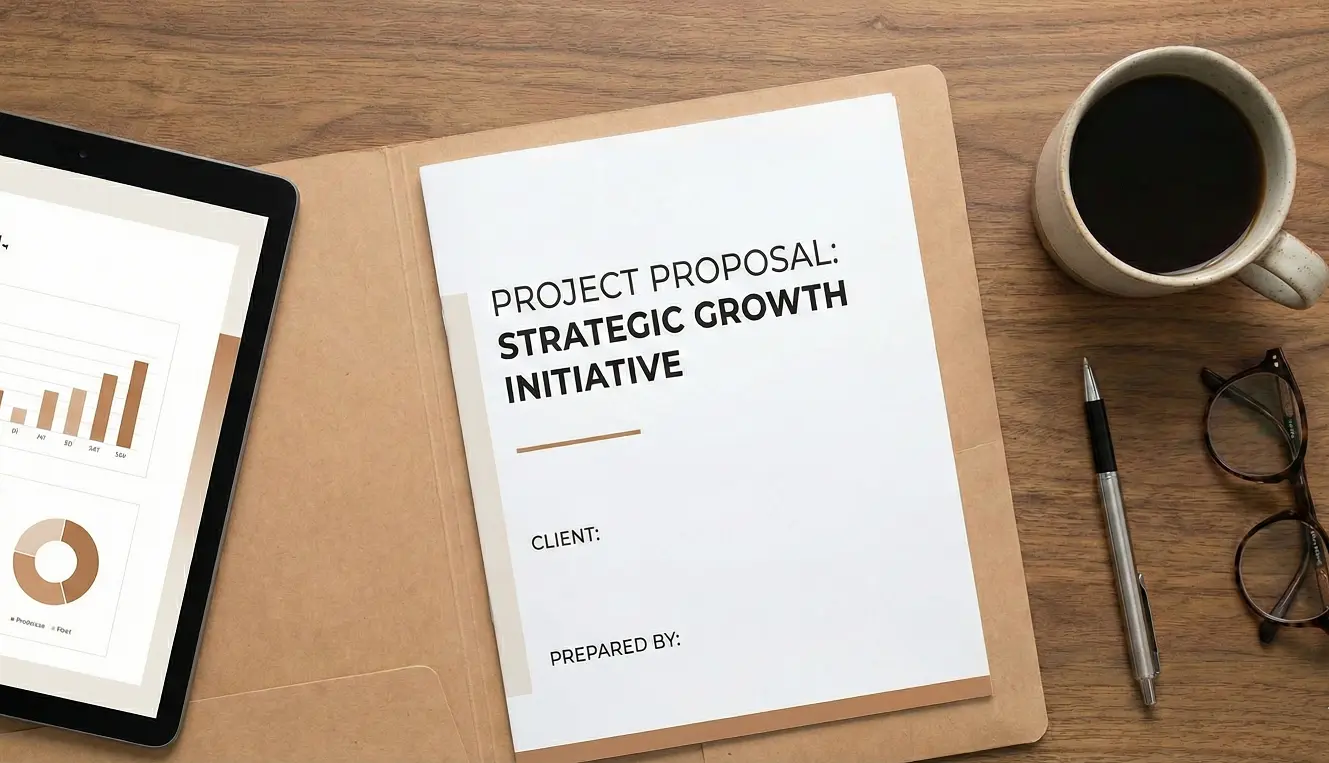
In the business world or non-profits, as well as freelance work, Ideas are the basis of creativity. An idea, however regardless of how innovative can be, is useless without the resources needed to make it a reality. Here is the point where the project proposal is needed.
A project proposal is much more than an outline. It’s a strategy tool that can be a convincing argument and a fundamental blueprint. The bridge that connects a dream idea and a real and successful result. If you’re looking for internal support from stakeholders, pitching prospective clients or submitting a grant application for funding, being able to create a persuasive project proposal is an essential capability.
This guide will walk you through the essential information you require about writing an “initiative” that is convincing, clear and earns you the approval.
What is a Project Proposal? (And Why It’s Crucial for Your Success)
The essence of the “project proposal” is an official document that describes the project’s goals, the timeline, scope and budget. Its main purpose is to convince decision-makers that your idea is worthy and achievable, as well as is in line with their strategic objectives.
A well-written project proposal has several essential functions:
Securities Approval and funding: It’s your formal request to receive the funds needed to complete the plan.
Provides a clear Roadmap: It serves as a reference point that your group can use, making sure everyone is on the same page regarding objectives and responsibilities.
Manages Stakeholder Expectations: By clearly defining the scope and the deliverables to be delivered, this avoids “scope creep” and misunderstandings later.
Proves Professionalism and Competence: A well-crafted project proposal creates faith and trust in the abilities to meet your goals.
Also Check 20 Best Productivity Tools for Project Managers
The 6 Essential Components of a Winning Project Proposal
Although the structure of a proposal can differ according to the complexity of the project and its intended the target audience, the majority of successful proposals have a common structure. Let’s look at each part in more detail.
1. The Executive Summary: Your Elevator Pitch
Imagine this as your entire proposal compiled into one, powerful page. It’s the first page that stakeholders will are likely to read, and the only thing that busy executives can read. So, it has to be incredibly convincing.
What to Include: Begin with a powerful hook; the issue or the opportunity. Simply outline your solution, the main advantages, the budget, and the timeframe. Highlight the value proposition and ROI (ROI).
Pro Tip: Although it’s written first, write the Executive Summary in the last. After you’ve outlined all the other sections, you’ll have a more clarity about what you’ll need to say in your executive summary.
2. The Problem Statement & Background: The “Why”
Before you can present your solution, it is essential to demonstrate that you have a clear understanding of the issue. This section explains the context and explains the necessity of your idea.
What to Include:
Problem Statement: An easy, concise description of the problem or opportunity that is being overlooked. Utilize information to support it. Example: “Our current website has a 70% bounce rate on mobile devices, leading to an estimated loss of $50,000 in potential monthly revenue.”
Background Information: Give relevant background information. What is the reason for this issue? What have you tried to solve it? Who are the people affected by it?
Keyword Focus: This is the place where you can naturally include the need for an “project proposal” by stating, “To address this challenge we have created the following proposal for a project.”
3. The Proposed Solution & Project Objectives: The “What”
This is the core of your project proposal. This is where you move from the issue to your specific, concrete plan. You need to outline what you’ll deliver.
What to Include:
Detailed Solution: Explain your strategy for finding the solution. What do you plan to create in the future, construct, or develop?
SMART Goals: The goals of your project should be specific, quantifiable achievable, relevant, and time-bound. In place of “improve website traffic,” suggest “Increase organic website traffic by 25% within 6 months of launch.”
Deliverables: It include the tangible results from the work. It could be a brand newly developed software component, a finished Marketing report or a new website, or even a built structure.
Success Metrics: How do you gauge the success? Determine Key Performance Indicators (Key Performance Indicators) like growth in revenue and user engagement or cost savings.
4. The Project Scope & Methodology: The “How”
This section shows that you’ve thought about the process. It describes the limits of the task and the methods you’ll employ to finish it.
What to Include:
Scope of Work: A thorough description of the tasks and tasks involved. This will help you understand the task and stop any scope creep.
Methodology: Explain your project management approach (e.g., Agile, Waterfall, Scrum). This demonstrates that you have a strategy for execution.
Resources Required: List team members and equipment, technologies, and access requirements for special equipment.
Assumptions and Limitations: Record the factors you believe to be accurate (e.g., “We assume key team members will be available”) and any restrictions (e.g., “The project must comply with GDPR regulations”).
5. The Timeline & Milestones: The “When”
An unplanned project that doesn’t have a plan is nothing more than an idea. A visual timeline can provide the user with a quick and clear understanding of the flow of the project and important deadlines.
What to Include:
High-Level Timeline: Make use of the Gantt chart or simple table to display the dates of start and ending for the major phases of a project.
Key Milestones: Note major milestones or deliverables during the lifecycle of the project (e.g., “Completion of Wireframes,” “Beta Launch,” “Final Client Approval”).
NOTE: Dependencies Take note of any task that is dependent on the accomplishment of other tasks.
6. The Budget & Financials: The “How Much”
It is usually the most scrutinized component of your *project proposal**. It should be clear precise, thorough, and well-justified.
What to Include:
Itemized Budget: Break down all expenses. Common categories include staff (salaries/hours) software/licenses marketing, equipment travel, funds for contingencies (usually 10 percent for unexpected expenses).
Justification: Explain the rationale behind large costs.
Return on the Investment (ROI ): If possible Determine the financial advantages. For instance, “This $20,000 investment is projected to generate $100,000 in new revenue within the first year, yielding a 400% ROI.”
Pro-Tips for Making Your Project Proposal Irresistible
Understanding what structure to use is important, but making a persuasive “project proposal”** project proposal is a different. Here’s how you can elevate your project proposal from average to outstanding.
Know Your Audience: Make sure you tailor your tone, language and the level of details to the readers. Technical teams will appreciate the details, whereas executives in the C-suite will be looking for the highest-level impact for business.
Lead with Benefits and not Features: Do not just describe the features of the project and then explain why it is important. In place than “We will create a new CRM,” write “The new CRM will automate our sales follow-up, reducing lead response time by 90% and increasing conversion rates.”
Use evidence and data: You can back your claims with solid evidence like case studies, testimonials as well as market research. This increases credibility and decreases the risk of being perceived as a risk.
Be concise and clear: Avoid jargons and unnecessary fluff. Make sure to use clear headers, bullet points and images (like graphs and charts) to help the reader look through and understand.
Proofread Discreetly: Grammatical and punctuation errors hinder your professionalism and pay focus on attention to. You can read it aloud, or have someone else read the document prior to submitting.
Different Types of Project Proposals
It’s crucial to understand that not all “project proposals” are alike. The context influences the importance.
Formally Solicited: As a Response the RFP (Request for Proposal). Your proposal should follow the instructions of the RFP to the letter.
Informally Solicited: A customer expresses interest but does not have the formality of an RFP. You can be more flexible, but still require a complete document.
Unsolicited: You can pitch your idea actively. This is a particular effective Abstract and Problem Statements to attract the attention.
Renewal: Aimed to secure financing or a partnership to continue a project. Concentrate on the past achievements and the potential for future success.
Continuation: A request to continue the project typically employed in multi-phase project. The focus should be on the progress to date as well as the reason for the next stage.
Conclusion: Your Blueprint for Action
A compelling “project proposal” can turn the best idea into a practical plan. It’s an essential document that requires careful thinking, careful planning and convincing writing. If you follow the format outlined in this guide; from the persuasive Executive Summary through the precise budget, itemized Budget; you can make an “project proposal” that not only conveys your ideas but also creates confidence and gets the necessary approval to achieve your goals.
Don’t let your next great idea sit on your “someday” pile. Make the effort to write an impressive and persuasive proposal. It’s, without a doubt, among the most important skills you can acquire for your professional career as well as your business’s advancement.
Now, go out and make a proposal!
Frequently Asked Questions (FAQs)
1. What is the major difference between a proposal for a project and a plan for executing the project?
It is a common issue. A “project proposal” is a convincing document that is written before a project has been accepted. The goal of the document is to get an approval “go-ahead,” the budget as well as the funds. It concentrates on the “why*, *what* and how much.
A “project plan” on the contrary is a guideline internal to the organization made after the project has been approved. It goes into greater detail about the specifics of the project’s execution for the team and covers the exact *how*,”when” and “who” for each project. Consider the proposal as the business case, and the plan as the comprehensive outline of the plan.
2. What length should a plan be?
There’s no universal answer since the length of the proposal depends entirely on the complexity of the project and the requirements of the audience. A simple internal “proposal” for a project** could be as little as 3 pages, while the proposal for a multi-million dollar external customer could take up to 50plus pages. The most important thing is to be as complete as you can, yet as short as is possible. Prioritize clarity and importance over length. In the event that an executive overview is the only thing the stakeholder is reading, make sure that it is packed with the most important details.
3. Which is the single most crucial component of a proposal?
Although every part is crucial however, the Executive Summaries, in all likelihood, the most crucial. It’s the first document that decision-makers read and for executives on the go, it may be the only thing they’ve ever read. When your executive summaries isn’t able to catch the attention of your audience and convey its value, they may not even be able to read the remainder of your meticulously designed project proposal. That’s why it has to be a compelling, stand-alone summary of your entire argument.