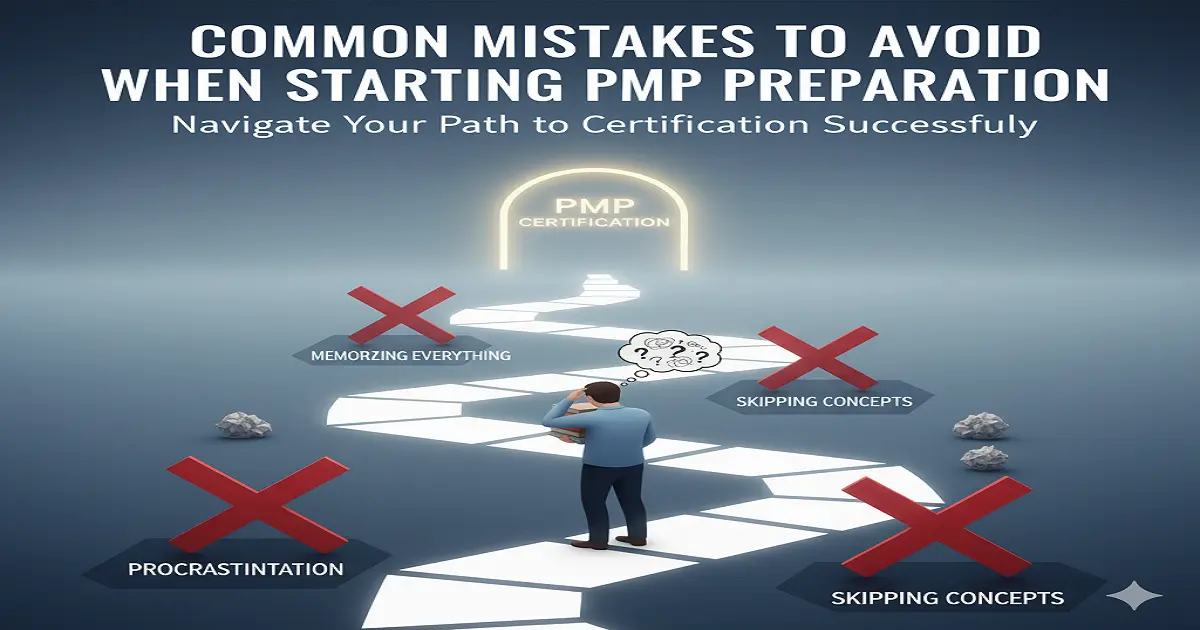
In the beginning, the process of preparing for taking the PMP (Project Management Professional) certification exam can be exciting but it can also be a bit daunting. Beware of common mistakes in the beginning will save time, ease stress, and create an excellent basis for a successful exam. This informative blog article identifies the most common mistakes PMP candidates often fall into as they begin their preparations and provides practical advice for avoiding them.
To be able to prepare for PMP certification requires a structured plan with consistent effort and the right selection of resources. These are the most frequently-made mistakes that candidates must avoid when beginning their PMP preparation.
Common Mistakes to Avoid When Starting PMP Preparation
1. Skipping the PMP Eligibility and Application Process Details
Many applicants dive right into their study materials without fully knowing the PMI’s eligibility requirements or the process for applying. This can result in waste of time if you do not have the required qualifications for education or work experience in the beginning.
Avoidance Tip:
- Go through the PMI’s official PMP handbook before you study to verify your eligibility based on management experience hours as well as your educational background.
- Get familiar with the steps to apply along with the documentation required and the audit procedure to avoid any surprises.
- Utilize the eligibility calculator tool of PMI accessible online to confirm your eligibility status.
2. Not Choosing a Structured Study Plan
A major challenges is establishing an organized and realistic schedule for studying. The PMP exam covers a wide curriculum, which includes Predictive, Agile and Hybrid methods.
Avoidance Tip:
- Make a study schedule with weekly or daily goals which are in line with your schedule. Try to be consistent.
- Divide the PMBOK Guide and Agile Practice Guide into manageable chunks that are aligned to your study timeline.
- Include regular review times and test-taking exercises to gauge your comprehension and retention.
3. Relying Solely on One Study Resource
Many students believe that one book or course will provide all the information they need. The PMP exam tests the application of knowledge using one source could restrict exposure to a variety of questions and scenarios.
Avoidance Tip:
- Make use of a variety of sources such as using the PMBOK Guide, Agile Practice Guide as well as preparatory textbooks (e.g., Rita Mulcahy) and video courses or question banks.
- You can diversify your study materials to incorporate various perspectives and questions.
- Make use of online forums as well as study groups and webinars for discussions and clarifications.
4. Neglecting the Agile and Hybrid Project Management Content
In 2021, PMI emphasizes agile and hybrid strategies as essential elements of the PMP test. Candidates who are new to the exam tend to focus on traditional waterfall approaches that result in inadequate preparation.
Avoidance Tip:
- Be sure that your study material and training courses are based on solid Agile and Hybrid methodology that is that are in line with the current PMP exam content outline.
- Questions based on scenarios specifically designed specifically for hybrid and agile project environments.
- Learn about Scrum, Kanban, and other Agile frameworks to strengthen your knowledge.
5. Procrastinating or Underestimating Time Commitment
Many students underestimate the amount of amount of time required for a quality exam that leads to cramming or final-minute marathons of study. The stress, the lower retention and anxiety about exams are common.
Avoidance Tip:
- Make a commitment to start early, and plan for at least 3 months of continuous study based on your experience.
- Set goals that are SMART (Specific, Measurable, Attainable and Time-bound) to monitor your progress.
- Set aside daily or weekly blocks in time to PMP studies as part of a mandatory routine.
6. Ignoring Practice Exams and Simulators
The theory you are learning without practicing actual exam-style questions could cause you to be unprepared for questions that are difficult and have time limitations.
Avoidance Tip:
- Begin practicing by using simulators and question banks as early as you can in your preparation.
- You can time yourself to simulate exam conditions and develop the ability to manage time.
- Examine your incorrect answers to determine weak areas and narrow your focus.
7. Avoiding Peer Study Groups or Forums
The isolation of preparation can decrease motivation and cause a slowing of problem solving. Social interaction with other candidates gives you a wide range of information and exam-related tips.
Avoidance Tip:
- Participate in PMP studies on LinkedIn, Reddit, or PMI chapters.
- Be active Engage in discussions, ask questions, and offer information.
- You might want to consider joining study groups in your area or online to be accountable.
8. Not Taking Care of Your Health and Wellbeing
Preparing for an exam can be very intense And ignoring sleep food, nutrition, and mental health impacts retention and concentration.
Avoidance Tip:
- Make sure you are eating a balanced diet, exercise regularly, and a regular sleep schedule in preparation.
- Regularly take breaks and utilize techniques for relaxation or mindfulness to ease stress.
- Keep yourself from burning out by having a balanced schedule of study and other leisure activities.
Conclusion
Beginning your PMP preparation with a solid foundation is vital to success. Avoiding the common mistakes – like not knowing eligibility, not having any study plan, forgetting the agile content, putting off and avoiding exams, being isolated or not taking care of your self-care will help you save time and increase your confidence.
If you follow a well-organized approach, balanced, and well-informed method, PMP aspirants can efficiently learn and improve chance of passing their PMI PMP test on their first attempt. Best of luck!
Frequently Asked Questions (FAQs)
1. How long will it normally take to study for the PMP test?
The length of preparation time is dependent on your personal background and the amount of study time available. Most applicants require between 3 and 6 months of constant study, including weekly or daily blocks of study designed to fit their schedule.
2. Do I have in order to earn 35 contact hours prior to beginning PMP test preparation?
Yes. PMI will require you to take a minimum of 35 hours of formal education in project management prior to taking the PMP test. It is suggested to select the best PMP preparation course that offers this certification at the beginning of your learning plan.
3. What’s the best method of studying Agile and Hybrid methods to pass exam PMP test?
Study with the latest materials and courses that align with the 2025 PMP Exam Content Outline, which emphasizes equally Agile and Hybrid strategies. Examine scenarios-based questions, and think about the addition of Agile frameworks such as Scrum or Kanban.
4. What is the importance of the practice tests for PMP exam preparation?
Exams for practice are essential as they mimic the exam setting, help improve the management of time, and find weak areas. Regular practice and reviewing of mistakes can greatly improve your chance that you will pass your PMP test.